Staying Active: Gardening, Golf, and Grandkids
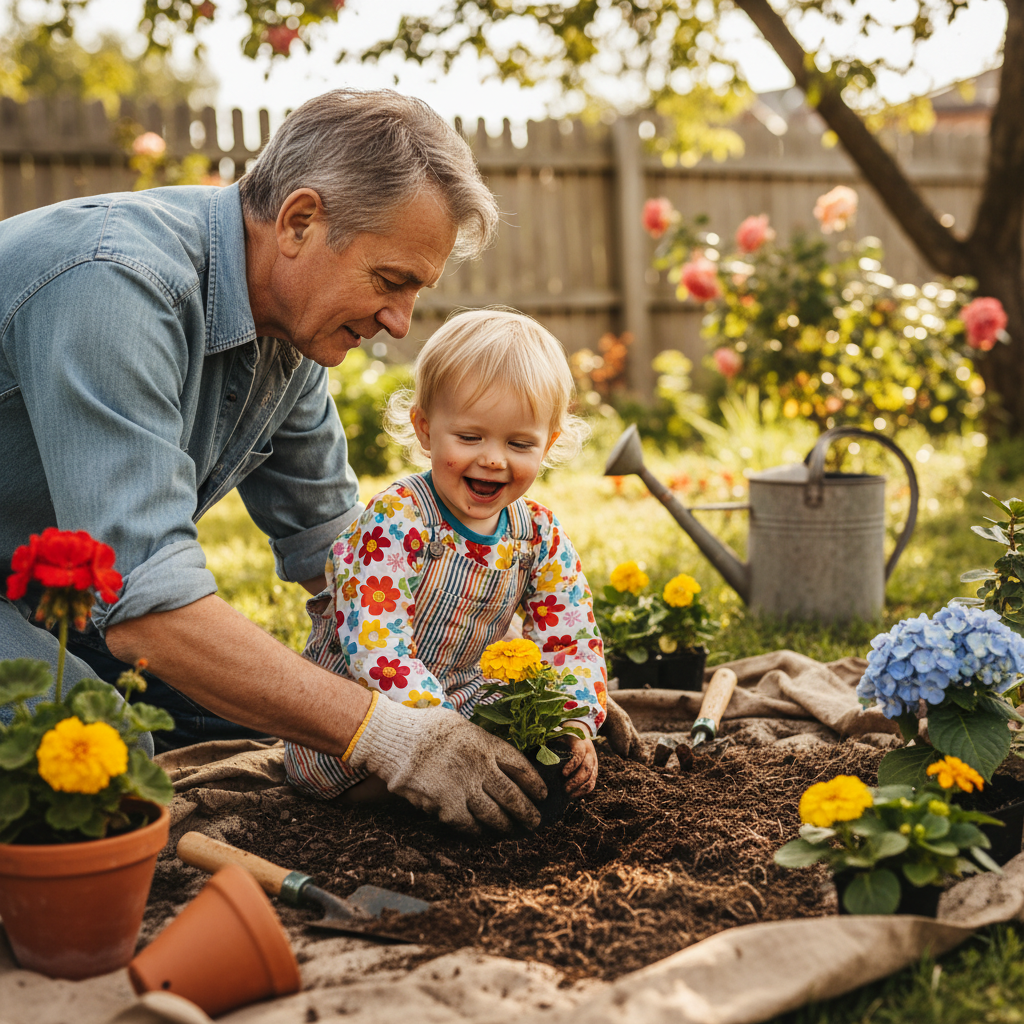
Nobody says, "I want to retire so I can sit still."
The vision is different: mornings in the garden, watching things grow. Weekend rounds of golf with old friends. Active play with grandchildren. Travel. Hobbies finally given their due time.
These activities aren't luxuries - they're the point. And they all require a body that cooperates.
The Activities That Define This Chapter
Gardening
Kneeling, bending, reaching, gripping. Gardening is surprisingly physical. It asks your knees to flex, your back to bend, your hands to work with precision. The rewards - beauty, food, connection to the earth - depend on a body that can show up consistently.
Golf
The golf swing is a complex athletic movement. It requires hip rotation, shoulder mobility, grip strength, and spinal flexibility. Eighteen holes means four or five miles of walking. Weekend golf is only possible when joints and muscles cooperate.
Playing with Grandchildren
Get up. Get down. Chase. Lift. Carry. Play games on the floor. Grandchildren don't pace themselves for adult limitations - and grandparents don't want to miss a moment of it.
Travel
Navigating airports. Walking cobblestone streets. Exploring ruins. Trying new activities. Travel in retirement assumes a body ready for adventure.
Hobbies
Woodworking. Pottery. Painting. Music. Each has its physical demands - standing, hand dexterity, posture maintenance. The hobbies we look forward to all year still require capable bodies.
What These Activities Have in Common
They all require:
- Joint mobility: Range of motion in hips, knees, shoulders, hands
- Muscle endurance: Ability to maintain activity over time
- Recovery capacity: Bouncing back from one day's activity to be ready for the next
- Freedom from excessive pain: Discomfort that doesn't prevent engagement
None require athletic excellence. They require functional capability - bodies that work well enough to do what we love.
The Recovery Factor
Here's what changes with age: not necessarily the ability to do things, but the ability to recover from them.
A round of golf that would have been forgotten by evening now lingers into the next day. An afternoon of gardening produces soreness that lasts longer than it used to. Playing hard with grandchildren requires recovery time that wasn't needed before.
This isn't failure - it's normal. But it means recovery becomes a skill to cultivate, not something that happens automatically.
Supporting Recovery
- Pre-activity preparation: Warm up before gardening, golf, or active play
- During activity: Stay hydrated, take breaks, listen to the body's signals
- Post-activity care: Gentle stretching, topical support for muscles and joints
- Overnight recovery: Quality sleep, nutritional support, targeted topical application
What you do after activity increasingly determines what you can do tomorrow.
The Role of Topical Support
Topical botanical oils fit naturally into an active retirement lifestyle:
Before Activities
Light application to areas that typically stiffen or ache can prepare tissue for the demands ahead. Think of it as part of your warm-up routine.
During Long Days
A pocket-sized roll-on can provide quick reapplication during 18 holes of golf, a full day in the garden, or extended grandchild time.
After Activities
Post-activity application supports recovery. The fatty acids, GLA, and vitamin E in quality botanical oils provide nutrients that muscles and joints use for repair.
Before Bed
Overnight is when significant recovery happens. Pre-bed application gives compounds hours to absorb and work while you sleep.
Specific Activity Considerations
For Gardening
- Hands: Apply to fingers and hands before and after, especially if gripping tools
- Knees: Before and after extended kneeling; consider knee pads for extended sessions
- Lower back: Pre-activity stretching plus topical support to lumbar area
- Shoulders: If reaching overhead (pruning, harvesting), shoulder application helpful
For Golf
- Lower back: The golf swing stresses this area; pre-round and post-round support
- Shoulders: Both for swing and for carrying/pulling clubs
- Hands/wrists: Grip demands are significant; apply to wrists and fingers
- Walking muscles: Calves and feet after 18 holes
For Grandchild Time
- Knees: Floor play, getting up and down repeatedly
- Lower back: Lifting, carrying, bending
- Shoulders: Lifting children, reaching for toys
- General preparation: You never know what they'll want to do - be ready for anything
For Travel
- Travel pack: Bring a small roll-on in carry-on
- After long walks: Apply to feet, ankles, knees
- After flights: Joints stiffen during long flights; application on arrival
- Daily routine: Maintain your normal application schedule even while traveling
The Mindset Shift
Young people recover automatically. Older people who stay active recover intentionally.
This isn't a burden - it's a practice. Like brushing teeth or eating well, recovery support becomes part of how you live. The small daily investments pay dividends in sustained capability.
Those who stay active into their 80s and beyond aren't lucky - they're intentional. They stretch. They move. They rest. They nourish. They support their bodies in the work of staying capable.
What We're Really Talking About
This isn't about avoiding decline. It's about living fully.
Grandchildren grow up fast. Gardens have their seasons. Golf buddies age alongside us. The years available for travel are finite.
These aren't activities to postpone until conditions are perfect. They're what make life worth living right now. And they require bodies that work well enough to participate.
You've earned this chapter. Support your body in making the most of it.
Magic Oil: For the gardeners, golfers, grandparents, and everyone who refuses to slow down. Targeted support that keeps up with your life.
Shop Now Save 25% with Monthly DeliveryReferences
- Park, S.A., et al. (2009). Physical and psychological health conditions of older adults classified as gardeners or nongardeners. HortScience, 44(1), 206-210.
- Murray, A.D., et al. (2017). Golf and health: a systematic qualitative review. British Journal of Sports Medicine, 51(15), 1049-1058.
- Gomes, M., et al. (2017). Grandparents who engage in physical activity with their grandchildren. Journal of Aging and Physical Activity, 25(4), 530-538.
- Calder, P.C. (2017). Omega-3 fatty acids and inflammatory processes: from molecules to man. Biochemical Society Transactions, 45(5), 1105-1115.
- Callaway, J.C. (2004). Hempseed as a nutritional resource: An overview. Euphytica, 140(1), 65-72.