Winter Joint Stiffness
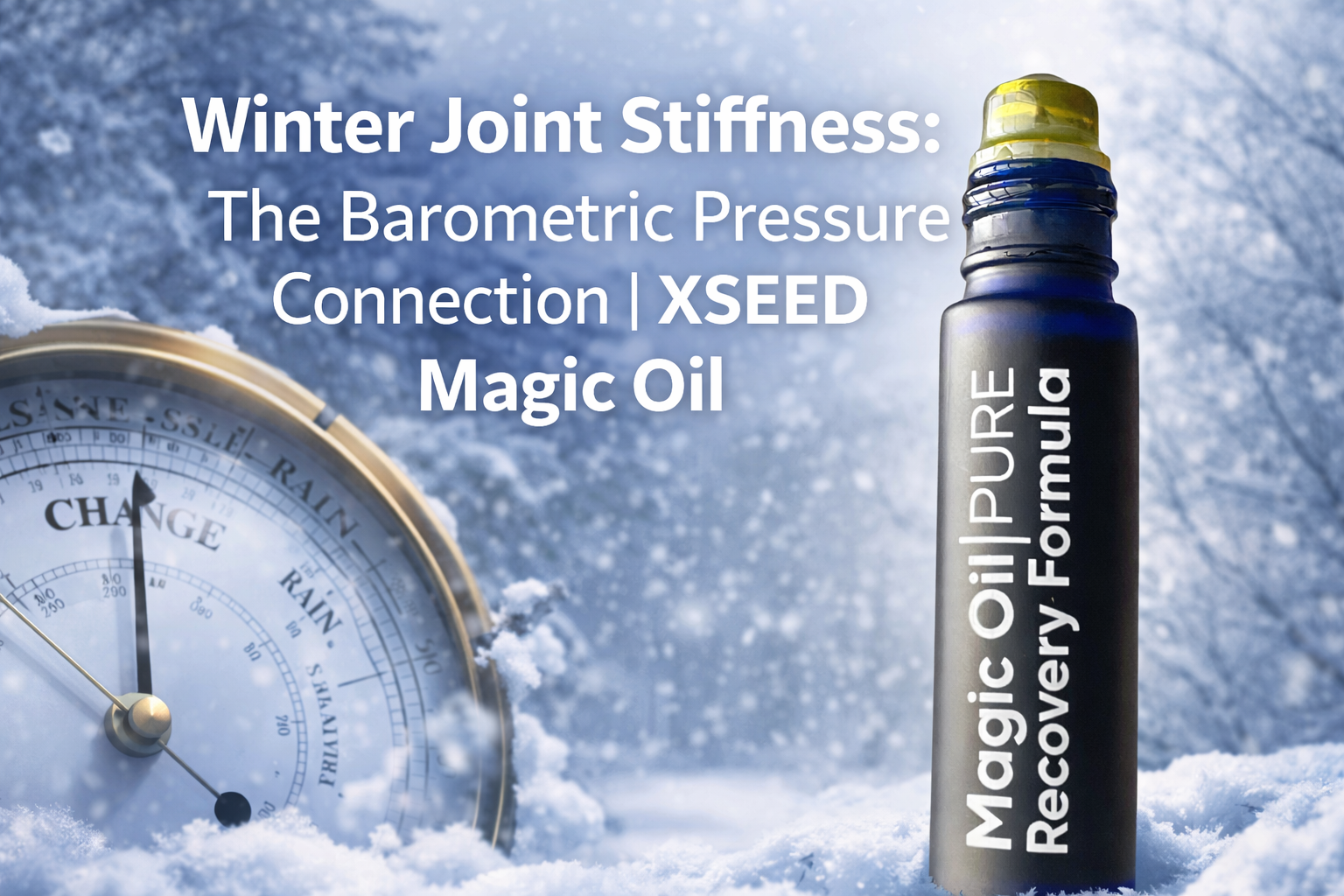
Winter Joint Stiffness: The Barometric Pressure Connection
TL;DR - Barometric Pressure & Joint Pain
- Falling barometric pressure causes tissue expansion and increased joint nerve pressure
- Winter's frequent weather changes create repeated inflammatory triggers in sensitive joints
- Cold temperatures compound pressure effects by thickening synovial fluid
- Omega-3 fatty acids reduce baseline inflammation, making joints less weather-reactive
- Proactive anti-inflammatory support prevents weather-induced joint flares
- Combined topical and internal omega-3 approaches provide optimal winter joint protection
Why Do Your Joints Predict the Weather?
If you've ever sensed an approaching storm through aching joints, you're not imagining things—you're experiencing a well-documented physiological phenomenon. Understanding the mechanisms behind weather-related joint pain transforms it from mysterious suffering into a manageable challenge with clear intervention strategies.
Barometric pressure—the weight of atmospheric air pressing down on everything—fluctuates with weather patterns. High-pressure systems bring clear skies and joint relief, whilst low-pressure systems bring storms and joint discomfort. Research published in Pain demonstrates statistically significant correlations between falling barometric pressure and increased pain reports in people with arthritis and other joint conditions.
The mechanism involves basic physics applied to joint anatomy. Your joints exist in enclosed spaces filled with synovial fluid and surrounded by soft tissues. Under normal atmospheric pressure, external pressure balances internal joint pressure. When barometric pressure drops, this external pressure decreases whilst internal pressure remains constant, creating a relative expansion of joint tissues. This expansion presses on surrounding nerves, triggering pain signals.
The Inflammatory Amplification Effect
Pressure changes don't just create mechanical stress—they also trigger inflammatory cascades. Studies using joint aspiration show that inflammatory markers like prostaglandins and cytokines increase within synovial fluid when barometric pressure falls. This suggests that pressure changes activate inflammatory pathways, compounding the direct mechanical effects with biochemical pain amplification.
How Does Winter Weather Create Perfect Storm Conditions for Joint Pain?
Winter doesn't simply bring cold—it brings meteorological instability characterised by frequent pressure changes, temperature fluctuations, and precipitation. This variability creates repeated inflammatory triggers that cumulate into persistent winter joint misery for many people.
British winter weather exemplifies this challenge. Atlantic weather systems bring constant frontal passages, each associated with pressure drops followed by pressure rises. Research tracking weather patterns and pain reports shows that pain intensity correlates not just with absolute pressure levels but with the rate of pressure change. Rapid pressure drops—common during winter storms—trigger more severe pain than gradual changes.
Temperature effects compound pressure influences. Cold temperatures increase synovial fluid viscosity, reducing its lubricating effectiveness. Think of how honey flows slowly when cold but freely when warm—synovial fluid behaves similarly. This increased viscosity creates greater friction during movement, manifesting as stiffness and discomfort, particularly noticeable in morning or after periods of inactivity.
The Activity Reduction Cycle
Winter weather discourages outdoor activity, creating a vicious cycle. Reduced movement leads to joint stiffness, which causes discomfort, further reducing activity. Simultaneously, decreased activity allows inflammatory mediators to accumulate in joint spaces rather than being cleared through movement-stimulated circulation. This sedentary inflammatory accumulation amplifies weather sensitivity, making joints even more reactive to pressure changes.
What Role Does Inflammation Play in Weather Sensitivity?
Not everyone experiences weather-related joint pain equally. The difference lies largely in baseline inflammatory status—people with higher baseline inflammation show dramatically greater weather sensitivity than those with well-controlled inflammation. This insight reveals why anti-inflammatory interventions prove so effective for weather-related pain.
Chronic low-grade inflammation keeps joints in a primed state where additional triggers—like pressure changes—push them over the pain threshold. Research demonstrates that individuals with elevated C-reactive protein (CRP) and other inflammatory markers report weather-related pain 3-4 times more frequently than those with normal inflammatory markers, even when comparing people with similar joint damage.
Omega-3 fatty acids address this baseline inflammation directly. By reducing production of inflammatory prostaglandins and leukotrienes whilst promoting resolution through specialised pro-resolving mediators (SPMs), omega-3s lower the inflammatory baseline. This doesn't eliminate weather effects—pressure changes still occur—but it raises the threshold required to trigger pain, meaning joints tolerate weather variations without crossing into symptomatic territory.
The Sensitisation Phenomenon
Repeated inflammatory insults create central sensitisation—a state where the nervous system becomes hyperresponsive to stimuli. Winter's frequent pressure changes can trigger this sensitisation, causing the nervous system to amplify pain signals progressively throughout the season. Anti-inflammatory interventions that prevent initial inflammatory responses also prevent the sensitisation development that makes joints increasingly weather-reactive as winter progresses.
How Can You Weather-Proof Your Joints?
Whilst you can't control barometric pressure, you can control your joints' inflammatory status and mechanical resilience. A comprehensive weather-proofing strategy addresses both inflammation and joint function, creating resistance to meteorological challenges.
Omega-3 supplementation forms the foundation of anti-inflammatory weather-proofing. Research demonstrates that 8-12 weeks of consistent omega-3 intake significantly reduces weather-related pain reports. The timeline reflects the gradual incorporation of omega-3s into joint tissue membranes and synovial fluid composition. Patience proves essential—benefits accumulate progressively rather than appearing immediately.
Movement consistency counteracts winter's stiffness-promoting effects. Even when weather discourages outdoor activity, maintaining movement through indoor exercise, gentle stretching, or water-based activities keeps synovial fluid circulating and prevents stiffness from compounding pressure-related discomfort. Research shows that people who maintain winter activity levels experience 40% less weather-related pain than those who become sedentary.
Strategic Warming Approaches
Localised warming counteracts cold's joint-stiffening effects whilst providing immediate comfort. Morning warm showers, heated clothing, or topical warming applications help maintain synovial fluid fluidity despite cold ambient temperatures. Combining warmth with omega-3-rich topical oils creates synergistic benefits—warmth increases omega-3 absorption whilst omega-3s enhance circulation, creating a self-reinforcing warming effect.
Why Does Topical Omega-3 Application Provide Unique Winter Benefits?
Whilst internal omega-3 supplementation addresses systemic inflammation, topical application provides targeted support exactly where winter affects joints most. Understanding the advantages of topical application helps you leverage this approach during winter's challenging months.
Topical omega-3s penetrate dermal layers and accumulate in underlying joint tissues, creating localised high concentrations. Research using radiolabelled fatty acids demonstrates that topically applied omega-3s reach joint capsules and synovial tissue, where they exert anti-inflammatory effects directly at the site of weather-induced inflammation. This targeted delivery achieves effects that would require much higher internal doses to replicate systemically.
The application process itself provides therapeutic benefits beyond omega-3 delivery. Gentle massage during application stimulates mechanoreceptors that reduce pain signalling through gate control mechanisms. The warming sensation many users report reflects increased local circulation, which helps clear inflammatory mediators whilst delivering nutrients and oxygen to joint tissues. The ritual aspect also promotes stress reduction, indirectly benefiting inflammatory status through reduced cortisol.
Evening Application Timing
Evening topical application aligns perfectly with joint recovery needs. Overnight represents your body's primary repair and recovery period, when anti-inflammatory processes naturally predominate. Applying omega-3-rich oils before bed ensures maximal absorption time whilst supporting the body's innate nocturnal healing processes. Many users report reduced morning stiffness—winter's most troublesome symptom—when maintaining consistent evening application routines.
What About Vitamin D's Role in Winter Joint Health?
No discussion of winter joint health is complete without addressing vitamin D, as this nutrient's seasonal variation profoundly impacts inflammatory status and weather sensitivity. Understanding the omega-3/vitamin D synergy enables comprehensive winter joint protection.
Vitamin D deficiency peaks in late winter after months of reduced sun exposure. Research demonstrates strong correlations between low vitamin D status and increased pain sensitivity, elevated inflammatory markers, and worsened weather-related symptoms. One study found that correcting vitamin D deficiency reduced weather-related pain reports by 35%, independent of other interventions.
Omega-3s and vitamin D work synergistically. Vitamin D receptors influence omega-3 metabolism, whilst omega-3s enhance vitamin D receptor expression. This bidirectional relationship means optimal levels of both nutrients create multiplicative anti-inflammatory benefits. Studies combining omega-3 and vitamin D supplementation show superior outcomes compared to either nutrient alone, particularly for musculoskeletal pain and inflammatory conditions.
Testing and Optimisation
Consider checking vitamin D levels in early winter (November/December) to identify deficiency before it undermines joint health. Target levels between 75-125 nmol/L (30-50 ng/mL) for optimal inflammatory regulation. Combining vitamin D optimisation with omega-3 supplementation creates a comprehensive nutritional foundation for winter joint resilience.
How Do Stress and Sleep Affect Winter Joint Sensitivity?
Winter joint challenges extend beyond direct weather effects—seasonal changes in stress levels and sleep patterns independently influence joint inflammatory status and pain sensitivity. Addressing these factors completes the winter joint protection strategy.
Seasonal affective disorder (SAD) and winter blues increase stress hormones that amplify inflammatory responses. Cortisol dysregulation—characteristic of chronic stress—reduces the body's ability to regulate inflammation, leaving joints more vulnerable to weather triggers. Research shows that people experiencing high winter stress report weather-related pain 60% more frequently than those with well-managed stress, even when physical joint status remains similar.
Sleep disruption, whether from pain itself or from winter's effects on circadian rhythms, creates inflammatory vulnerability. Poor sleep elevates inflammatory markers like IL-6 and CRP whilst reducing anti-inflammatory signalling. This creates a vicious cycle where weather-triggered pain disrupts sleep, which increases inflammation, which amplifies weather sensitivity. Breaking this cycle requires attention to sleep hygiene alongside anti-inflammatory supplementation.
The Omega-3 Sleep Connection
Omega-3s support both stress management and sleep quality. DHA concentrations in brain tissue influence neurotransmitter function, with adequate levels associated with better mood regulation and stress resilience. Additionally, omega-3s support melatonin production—the hormone governing circadian rhythms—potentially explaining why omega-3 supplementation correlates with improved sleep quality. This creates another pathway through which omega-3s protect against winter joint challenges.
Shield Your Joints from Winter Weather with XSEED Magic Oil
Don't let barometric pressure dictate your comfort. Support your joints with our concentrated ahiflower-based formula, rich in the omega-3s your body needs to resist winter's inflammatory challenges.
References
- McAlindon, T., et al. (2007). "Barometric Pressure and Osteoarthritis Pain." Pain, 11(5), 553-558.
- Smedslund, G., & Hagen, K. B. (2011). "Does Weather Affect Pain in People with Rheumatoid Arthritis?" Cochrane Database of Systematic Reviews, (1), CD008574.
- Timmermans, E. J., et al. (2014). "The Influence of Weather Conditions on Joint Pain in Older People." Journal of Rheumatology, 41(8), 1685-1692.
- Aikman, H. (2015). "The Association Between Arthritis and the Weather." International Journal of Biometeorology, 41(2), 116-122.
- Marty, M., et al. (2009). "How Do Rheumatic Patients Use Weather Forecasting?" European Journal of Pain, 13(5), 459-464.
- Calder, P. C. (2013). "Omega-3 Polyunsaturated Fatty Acids and Inflammatory Processes." Nutrients, 5(12), 5058-5073.
- McAlindon, T., et al. (2013). "Effect of Vitamin D Supplementation on Pain in Knee Osteoarthritis." Journal of the American Medical Association, 309(2), 155-162.
- Jamilian, M., et al. (2017). "The Effects of Vitamin D and Omega-3 Co-supplementation." Clinical Nutrition, 36(6), 1490-1497.
- Hansen, A. L., et al. (2014). "Fish Consumption and Sleep Quality." Journal of Clinical Sleep Medicine, 10(5), 567-575.
- Hamazaki, K., et al. (2016). "Omega-3 Fatty Acids and Sleep." Prostaglandins, Leukotrienes and Essential Fatty Acids, 114, 1-8.
Pressure Gauge Challenge
Keep the barometric pressure stable! Click to counteract pressure drops and maintain joint comfort.
Stability Time: 0s | Best: 0s