Topical Relief Without Systemic Side Effects
As we age, the medicine cabinet often grows fuller. Pills for this, capsules for that, prescriptions stacking up. Each one may help its intended purpose, but the combination creates concerns:
Drug interactions. Side effects. The burden on liver and kidneys. The list of warnings that grows longer with each new medication.
What if there was a way to address local discomfort without adding to the systemic load?
This is the promise of topical application—and why it's particularly valuable for older adults.
The Problem with Systemic Pain Relief
Common oral pain relievers come with well-documented issues:
NSAIDs (Ibuprofen, Naproxen)
- Stomach irritation and ulcer risk
- Cardiovascular concerns with long-term use
- Kidney strain
- Interactions with blood thinners and other medications
Acetaminophen (Paracetamol)
- Liver burden
- Risk with alcohol consumption
- Inadvertent overdose risk (hidden in many combination products)
Prescription Options
- Opioid dependency concerns
- Significant side effect profiles
- Interactions with existing medications
- Cognitive effects
None of this means these medications should never be used. But for localised discomfort—a sore knee, stiff fingers, an aching shoulder—systemic medications may be overkill.
The Topical Advantage
When you apply a compound to your skin, the pharmacokinetics are entirely different:
Localised Effect
Compounds applied topically concentrate in the tissue beneath the application site. They don't need to travel through the entire body to reach the problem area.
Minimal Systemic Absorption
The skin is a barrier. While lipid-soluble compounds do penetrate into local tissue, very little reaches the bloodstream. Studies of topical anti-inflammatories confirm this—local tissue concentrations can be high while blood levels remain minimal.
No First-Pass Metabolism
Oral medications pass through the liver before reaching their target. This "first-pass metabolism" can create active metabolites, reduce bioavailability, and burden the liver. Topical application bypasses this entirely.
Reduced Interactions
With minimal systemic absorption, topical compounds are unlikely to interact with other medications. This is particularly valuable for those on multiple prescriptions.
No GI Effects
Stomach irritation is impossible when the compound never enters the digestive system.
What Makes an Effective Topical?
Not all topicals are created equal. For genuine relief:
Lipid-Soluble Compounds
Water-based products sit on the skin surface. Oil-based products containing lipid-soluble compounds actually penetrate into tissue. Fatty acids, terpenes, and oil-based vitamins are naturally suited for topical delivery.
Anti-Inflammatory Components
For discomfort relief, the topical should contain compounds that modulate inflammation:
- Omega-3 and GLA fatty acids
- Vitamin E
- Terpenes (particularly beta-caryophyllene)
Adequate Concentration
Homeopathic doses won't provide noticeable effects. The active compounds need to be present in meaningful amounts.
Appropriate Delivery Method
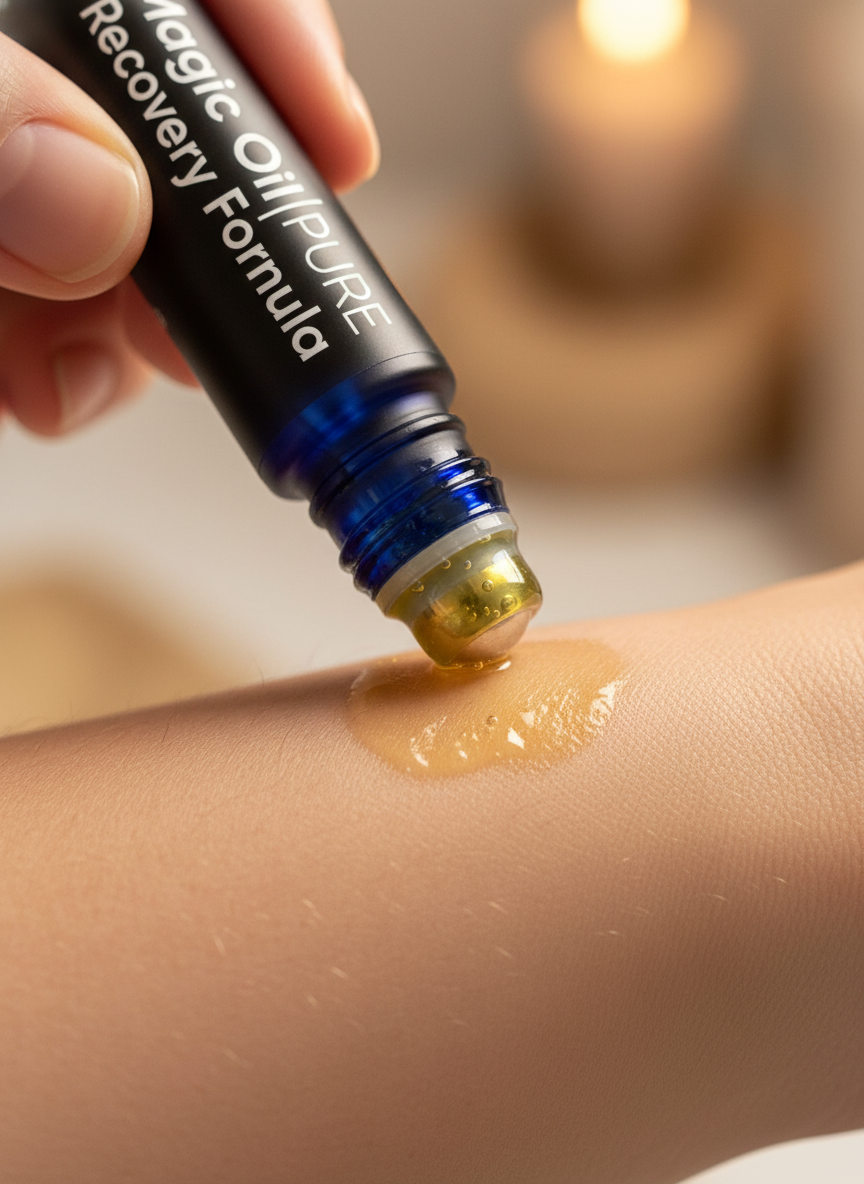
For joints and muscles, a roll-on or massage application allows the oil to be worked into the tissue, enhancing absorption.
Natural Botanical Topicals
Fatty acid-rich botanical oils offer a particular advantage for older adults:
What They Contain
- Omega-3, omega-6, omega-9 fatty acids: Support local tissue health and inflammatory balance
- GLA: Produces anti-inflammatory prostaglandins locally
- Vitamin E: Antioxidant protection for tissue
- Terpenes: Additional anti-inflammatory and comfort-promoting effects
What They Don't Contain
- Synthetic drugs
- Compounds that burden the liver
- Ingredients that interact with medications
- Harsh chemicals that irritate skin
Safety Profile
Quality botanical oils used topically have excellent safety profiles:
- No known drug interactions
- Rare allergic reactions (patch test if concerned)
- Safe for repeated use
- Appropriate for long-term support
Practical Application
For Joint Discomfort
Apply oil directly to the joint. Massage gently. The warmth from your hand aids absorption. For deeper joints (hip, shoulder), more generous application may be needed.
For Muscle Stiffness
Apply to the affected muscle. Light massage increases absorption and provides additional benefit. Post-activity application can support recovery.
For Hand and Finger Issues
Apply to hands and gently work the oil into finger joints. Overnight application (with cotton gloves if desired) allows extended contact time.
Frequency
Unlike medications with fixed dosing schedules, topical oils can be applied as needed. Common patterns:
- Morning and evening for ongoing issues
- Before and after activity
- As needed when discomfort arises
Complementing (Not Replacing) Medical Care
Topical botanical oils are appropriate for:
- Day-to-day discomfort management
- Age-related stiffness and soreness
- Activity-related muscle fatigue
- Supporting overall joint and tissue health
They're not a replacement for:
- Prescription medications your doctor has recommended
- Treatment of underlying conditions
- Acute injuries requiring medical attention
- Severe or worsening symptoms
Topical oils can often be used alongside conventional treatment—they're generally compatible with other approaches. But always inform your healthcare providers about what you're using.
The Relief of Simplicity
There's something to be said for solving simple problems simply.
Local discomfort often benefits from local solutions. A sore knee doesn't necessarily need medication that affects your entire body. Sometimes what it needs is direct, targeted support.
Older adults face enough complexity in managing health. Topical botanical oils offer an elegant, minimal approach: one or two ingredients, applied where needed, working locally without systemic burden.
No new pills. No new interactions to worry about. Just plant-based support, delivered directly to where it's needed.
Sometimes the simplest solution is the best one.
Magic Oil: Targeted relief without systemic burden. Just two natural ingredients, applied where you need them.
Experience the DifferenceReferences
- Haroutiunian, S., et al. (2010). Topical NSAIDs for pain treatment: local effects without systemic absorption. European Journal of Pain, 14(7), 748-754.
- Altman, R., et al. (2009). Pharmacokinetics of topical versus oral NSAIDs. Osteoarthritis and Cartilage, 17(S1), S93-S94.
- Prausnitz, M.R., & Langer, R. (2008). Transdermal drug delivery. Nature Biotechnology, 26(11), 1261-1268.
- Calder, P.C. (2017). Omega-3 fatty acids and inflammatory processes. Biochemical Society Transactions, 45(5), 1105-1115.
- Gertsch, J., et al. (2008). Beta-caryophyllene is a dietary cannabinoid. Proceedings of the National Academy of Sciences, 105(26), 9099-9104.
- Callaway, J.C. (2004). Hempseed as a nutritional resource: An overview. Euphytica, 140(1), 65-72.